
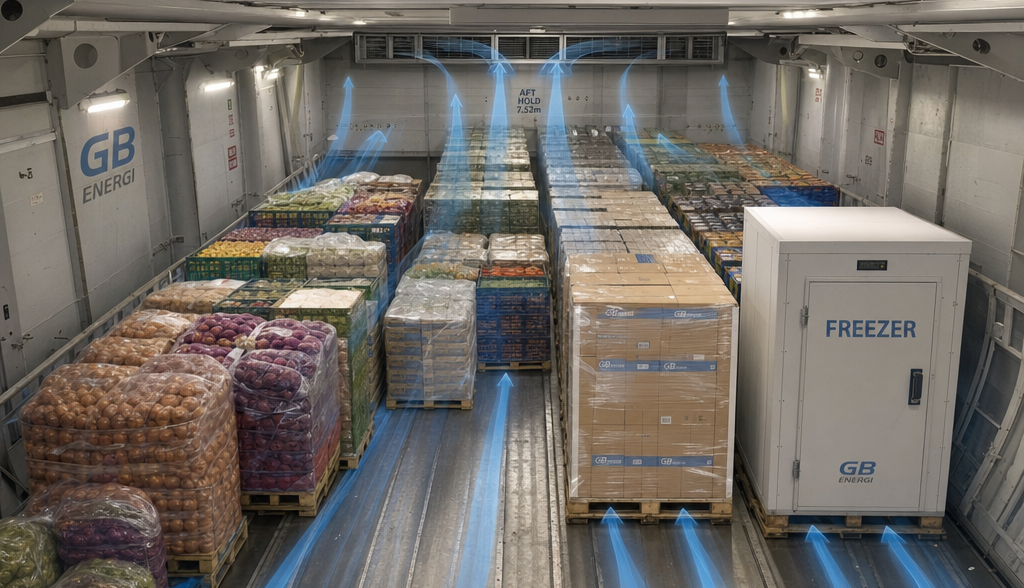
Cooled cargo
A cooled hold concept built to protect produce, airflow quality and delivery value.
Cooled cargo only works when the hold, airflow and cargo handling are designed to protect the product from loading to discharge.
Spoilage is the real cost
For produce and other sensitive goods, freight price is only part of the equation. The larger cost sits in ripening losses, excess moisture, poor ventilation and delays that damage sale value before the cargo reaches market.
The hold must breathe, not just cool
This concept is built around a high fresh-air exchange loop so the hold can purge ethylene, humidity and heat from palletized cargo instead of trapping it. That matters for fruit and vegetables that continue to respire during the voyage and can spoil faster in a badly ventilated space.
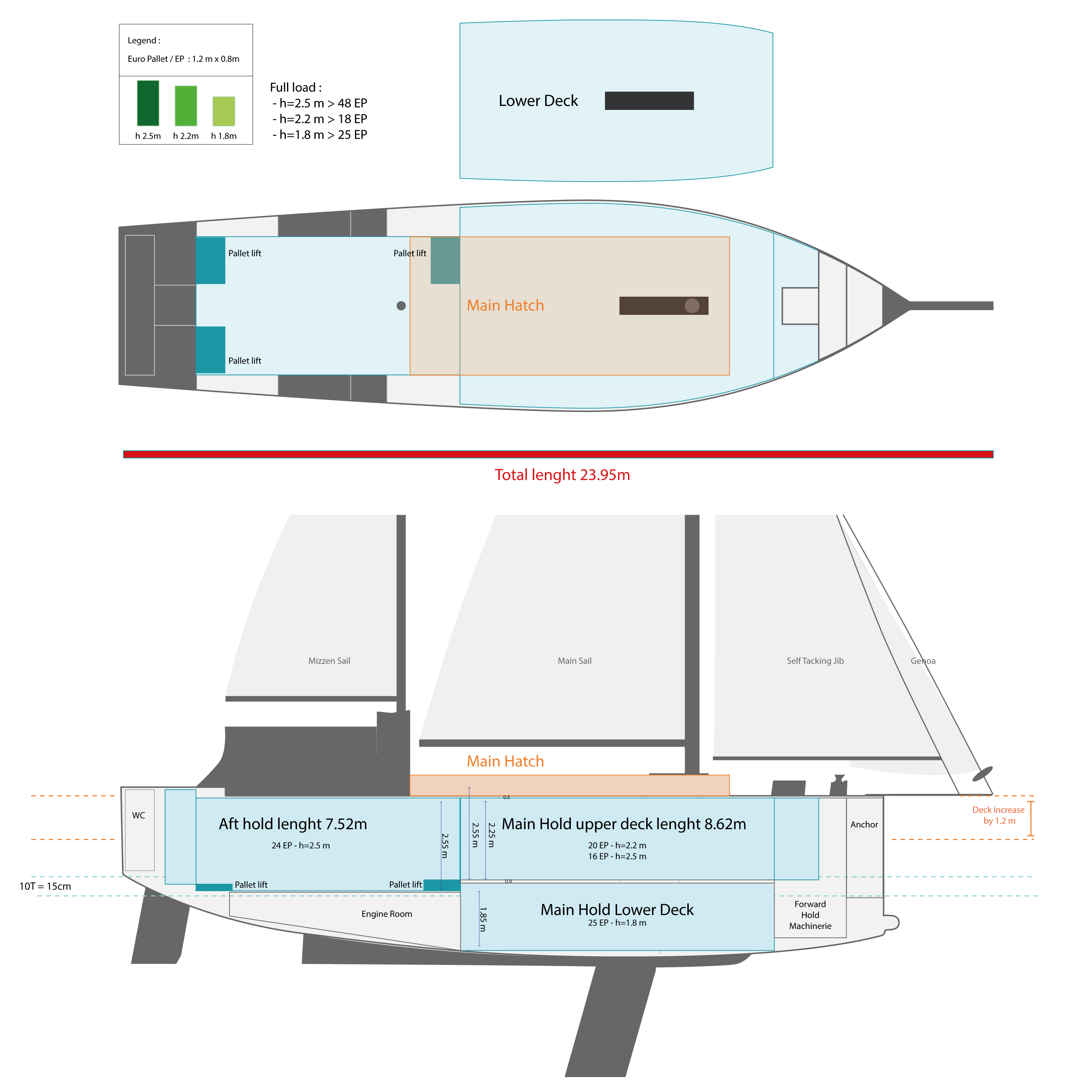
Hold layout and airflow logic
Pallet flow with conditioned air delivery
The hold concept is arranged around Euro-pallet stowage, under-pallet air delivery and vertical return flow through the cargo space. The goal is not simply cold air, but uniform temperature and fresh-air movement through the load.
Why it matters
That makes the system better suited to produce and mixed temperature-sensitive goods that lose value when only the front of the hold gets cooling while the rest of the cargo absorbs moisture and ripening gases.
Redundancy is part of cargo protection
The refrigeration concept is based on dual cooling units, not a single point of failure. If one module drops out, the remaining capacity is intended to preserve cargo stability long enough to avoid immediate loss of the load. That is a commercial protection measure, not only a technical one.
Pallet discipline keeps the cold chain usable
The system is designed around palletized cargo, including standard goods plus full-height pallet freezer units when frozen products need to travel with the rest of the load. That gives operators more flexibility than a hold built only for one cargo type.
Dehumidification and airflow improve cargo life
Cooling tropical or warm-climate intake air is not only about lowering temperature. It is also about stripping moisture out of the ventilation stream before that moisture ends up in packaging, surfaces and produce. Dry, controlled air helps preserve cargo condition and reduces avoidable loss.
This must be planned together with the vessel and the route
Good cooled transport depends on hold geometry, airflow paths, turnaround time and harbor workflow working together. Read this together with Vessel design when the route case depends on cargo quality, freezer capability and smaller-harbor operations working as one system.