
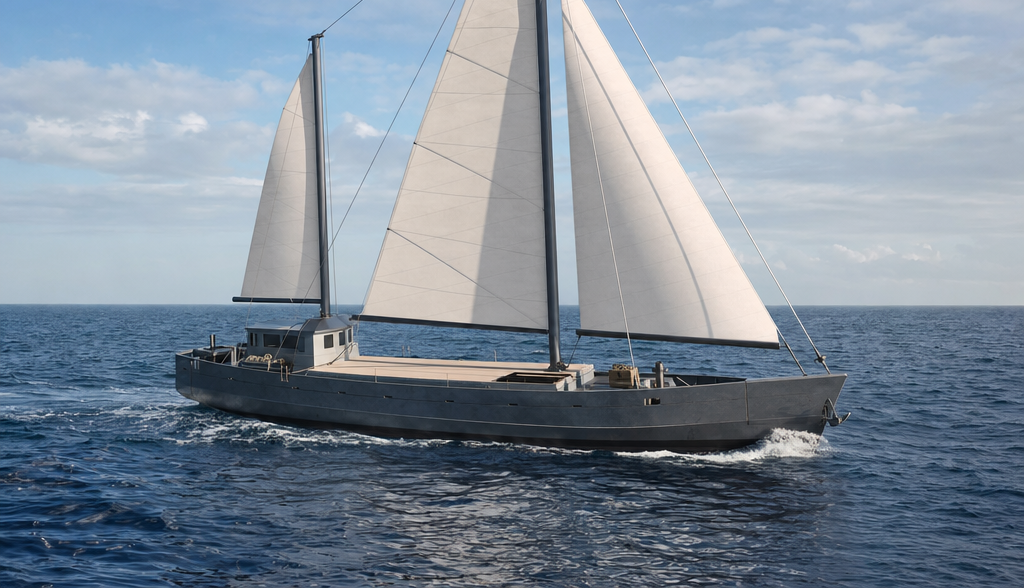
Vessel design
A cargo vessel concept built around shallow draft, pallet flow and lower operating friction.
This vessel concept is built for operators who need real cargo work done in places where larger ships, deeper draft and crane-dependent handling create cost, delay and route friction.
Pallet-based cargo architecture
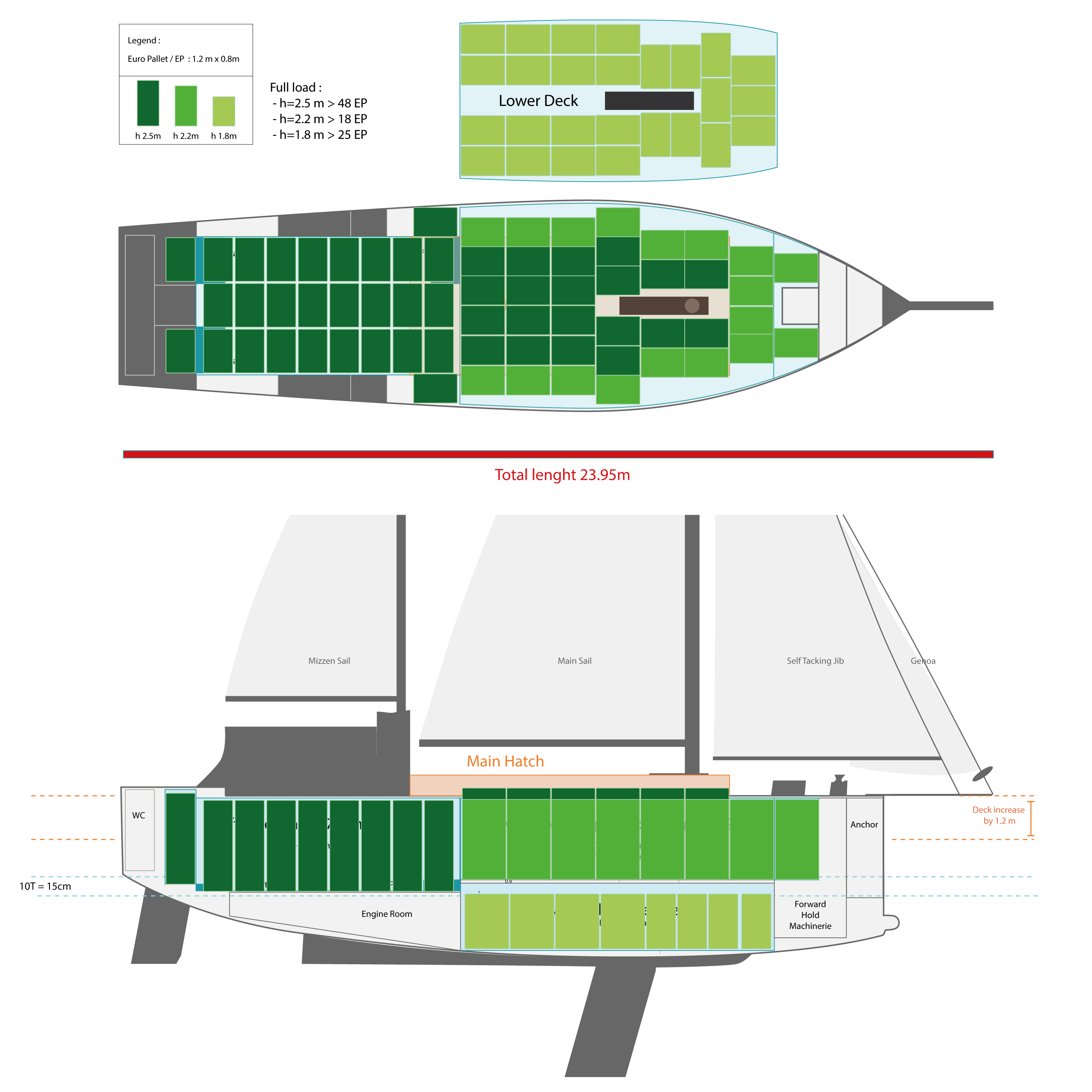
88 Euro-pallets within a 23.95 m hull
The current arrangement is designed around 24 pallets in the aft hold and 64 pallets in the main hold. The payload target is up to 72 metric tons while keeping the cargo system standardized for pallet movement rather than loose mixed freight.
Why it matters
This reduces handling uncertainty, makes loading plans repeatable and lets the vessel serve recurring island routes with a cargo pattern operators already understand.
Built below the heavy-cost vessel threshold
At 23.95 meters LOA, the platform is intentionally designed below key regulatory and port-cost breakpoints. That matters because route economics are not only driven by fuel and crew. Fees, compliance burden and harbor handling rules can decide whether a smaller route is commercially usable.
Shallow draft creates route options larger ships do not have
Light draft is part of the business case, not a cosmetic design feature. Unladen draft is about 1.52 m. Fully loaded draft is about 2.62 m before daggerboard extension. That opens access to smaller harbors and secondary quays where deeper vessels become restricted or uneconomic.
The cargo hold is engineered around pallet flow
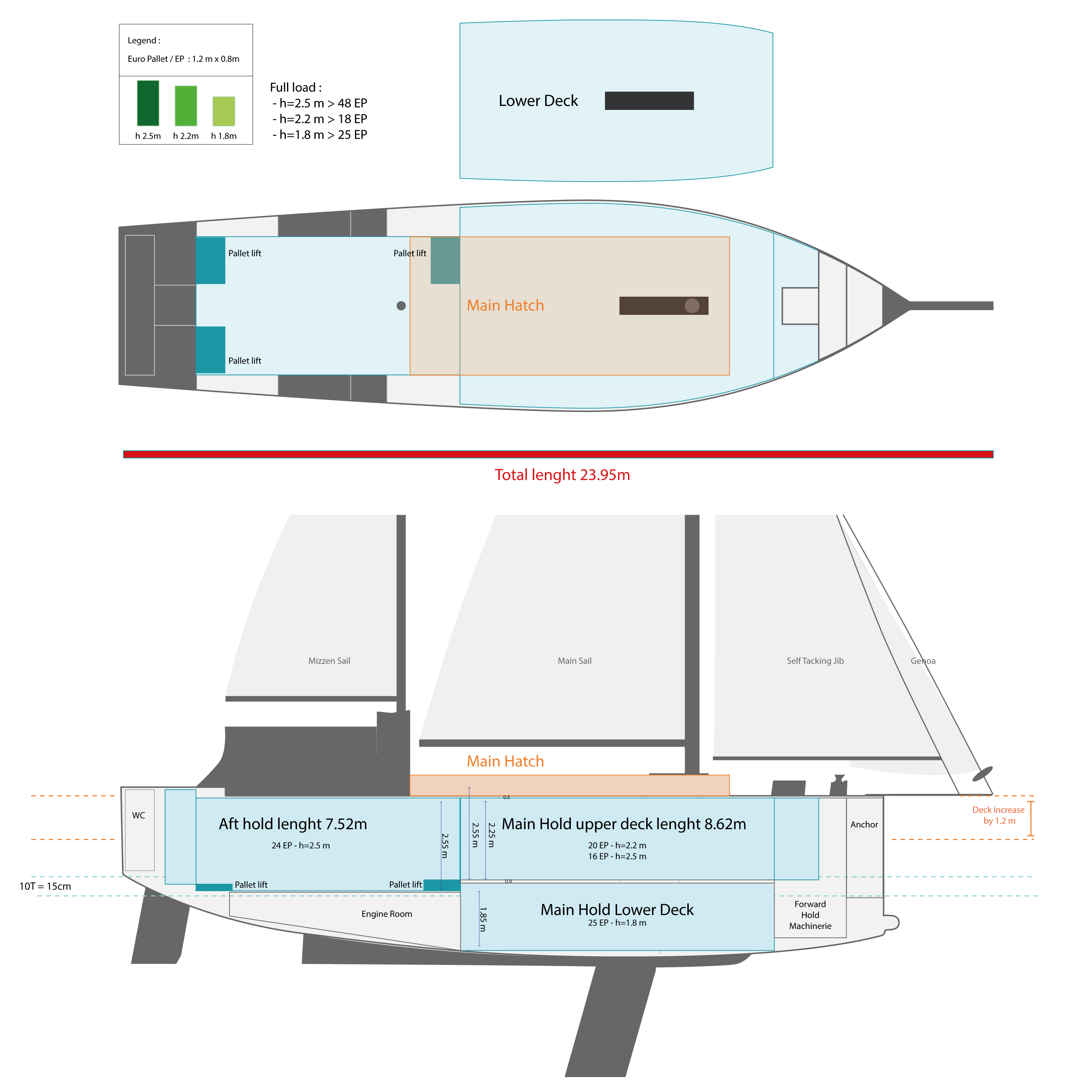
The vessel is not designed for chaotic mixed stowage. It is designed around Euro-pallet movement, straight cargo walls, controlled hold geometry and a clear loading logic. A dual-rail lift concept is included so pallets from the lower hold can be brought to deck without forcing every cargo move to depend on a large shore crane reaching deep into the vessel.
Hold geometry and access zones
Main hatch and hold proportions
The reference layout shows an aft hold of about 7.52 m, a main upper-hold deck length of about 8.62 m and a lower hold arranged below. The hatch opening is sized around practical pallet work, not oversized port machinery.
Operational effect
The vessel can be integrated into smaller port workflows while still carrying meaningful cargo volume for scheduled island supply, produce, seafood and other time-sensitive freight.
Sail assistance and electric drive reduce exposure to diesel-only economics
The propulsion concept is built around a 60 kW electric main motor, hybrid gearbox ratios and regenerative capability under sail. That matters most on repeated regional passages where fuel volatility hits every sailing schedule and every freight calculation.
The platform is designed for real weather, not only ideal drawings
The ketch rig, retractable daggerboard and steel-based working structure are there to expand usable operating windows. With daggerboard down, the vessel gains the lateral resistance needed for meaningful upwind work. With it retracted, drag is reduced for more favorable conditions and harbor approach.
Small crew demand is part of the model
A vessel for regional feeder work must be operable without a large manning burden. This concept is structured around a three-person working crew, onboard systems that reduce routine handling load, and a platform that can support regular service rather than occasional demonstration voyages.
Cooled cargo is part of the design, not an afterthought
The hold concept is intended to support temperature-controlled cargo, including produce and other goods that lose value quickly when the chain is broken. Read this together with Cooled cargo when the route case depends on cargo condition as much as freight price.